

Which Cooking Methods Suit Sunflower Oil
Sunflower oil is commonly used for everyday cooking, but the right cooking method depends on the oil's composition and how much heat the method involves. So, instead of asking whether sunflower oil is simply “good for cooking,” it is more useful to ask: which cooking methods suit sunflower oil best?
For most home kitchens, sunflower oil can be used for sautéing, tempering, shallow frying and other everyday cooking methods. The important factor is how the oil behaves under the heat you are applying.
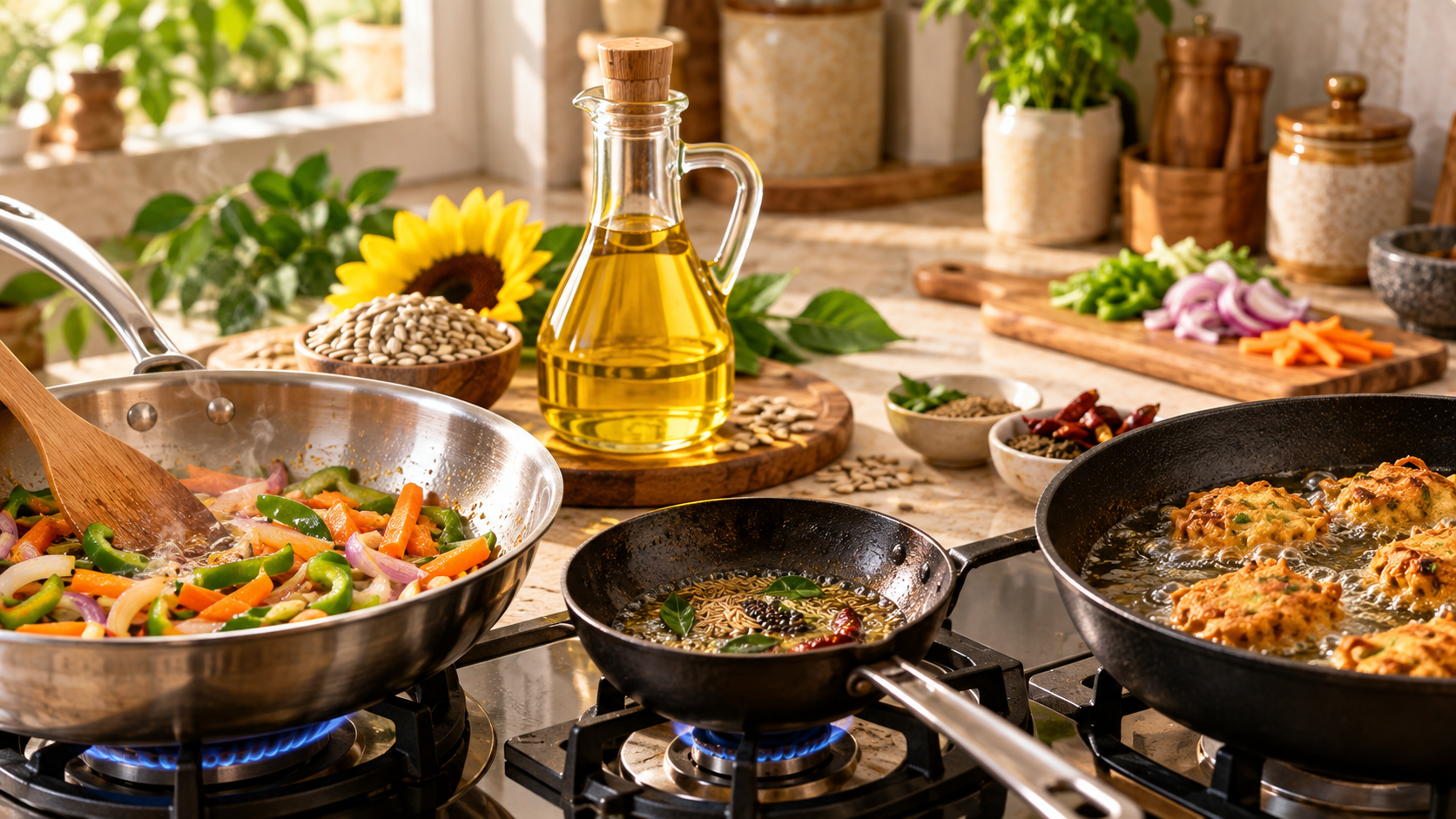
Various everyday cooking methods suited for sunflower oil.
Why Does the Cooking Method Matter?
The fatty acid profile of an oil influences its behaviour during heating. Conventional sunflower oil is generally rich in linoleic acid, a polyunsaturated fatty acid. High-oleic sunflower oil, on the other hand, contains substantially more oleic acid and is more resistant to oxidative degradation during frying.
This means that “sunflower oil” should not automatically be treated as one identical product. Seed variety and fatty-acid composition matter.
Which Cooking Methods Work Well With Sunflower Oil?
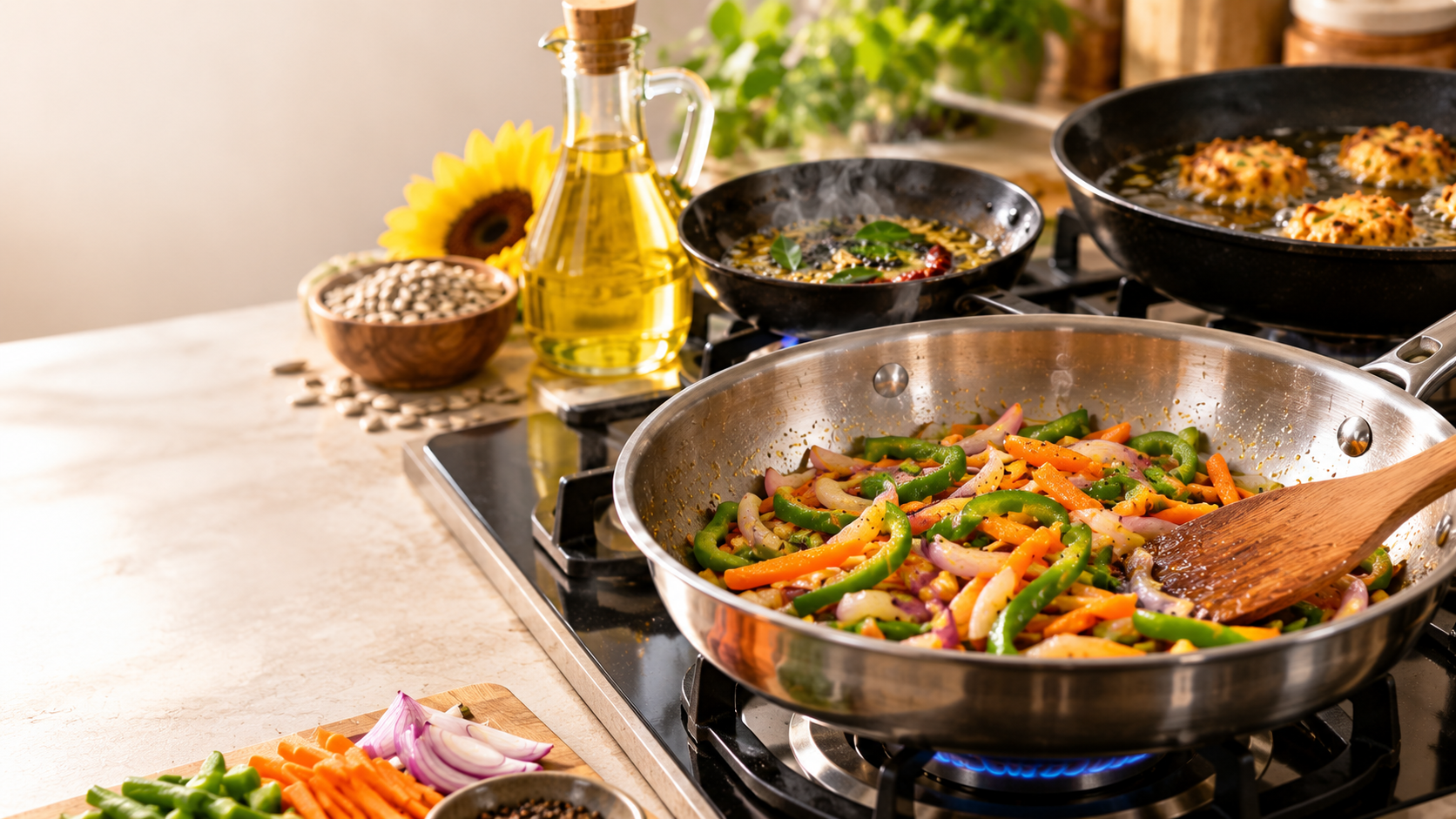
Sautéing vegetables with sunflower oil over moderate heat.
Sautéing
Sautéing vegetables, onions, spices and other ingredients over moderate heat is a practical use for sunflower oil.
It has a relatively neutral flavour, so it can work well when you want the taste of the ingredients to remain prominent rather than allowing the oil to dominate the dish.
Tempering or Tadka
Sunflower oil can also be used for everyday tempering, where spices such as mustard seeds, cumin, curry leaves or dried chillies are briefly heated in oil before being added to a dish.
Because the cooking time is short, the focus is more on controlled heating than prolonged exposure to high temperatures.
Shallow Frying
Shallow frying uses more heat than sautéing and exposes the oil to higher temperatures for longer.
Sunflower oil can be used for this method, but temperature control matters. Research shows that heating can alter the fatty-acid composition of sunflower oil and promote oxidation, particularly with prolonged or repeated heating.
Deep Frying
Deep frying requires more consideration.
Research comparing sunflower oils shows that high-oleic sunflower oil has greater frying stability than conventional sunflower oil, largely because of its higher oleic-acid content and lower linoleic-acid content.
So, rather than assuming that every sunflower oil performs identically during prolonged deep frying, it is better to consider its fatty acid profile, temperature and duration of heating.
What Should You Remember?
There is no single cooking method that defines the use of sunflower oil.
For everyday home cooking, sautéing, tempering and shallow frying are practical applications. Higher-heat or prolonged frying requires greater attention to the specific sunflower oil being used and how it is heated.
The key is not simply choosing a pure sunflower oil or a cold pressed sunflower oil based on the label. Understanding the oil's composition and matching it to the cooking method gives you a more informed way to use it.
The better question isn't “Is sunflower oil good?”
It is:
“Is this sunflower oil suited to the way I cook?”
